Businesses spending money on custom emojis sounds like a joke from 2012. "Oh, your startup has unlimited snacks and emoji budgets?" In 2026, it's actually a real line item in Slack and Discord budgets at companies you've heard of.
This isn't frivolous. It's a measurable lever on communication and employee engagement. Here's why the math actually works.
The Engagement Problem That Emoji Solves
Remote and async work has a hidden cost: engagement collapse. Gallup data from 2024-2025 shows remote employees with low engagement cost companies roughly 18% of their annual salary in lost productivity. That's not hypothetical—that's $180k per $1M in remote salaries, annually.
Most companies throw money at the wrong solutions. More meetings. More Slack integrations. More compliance training. Nobody throws money at the thing that actually works: friction reduction in async communication.
Custom emojis reduce friction. A developer on a pull request can react with :approved: emoji instead of typing "LGTM". That's three seconds saved per reaction, per person, per day. Multiply across 50 developers, 200 working days per year. That's hundreds of hours recovered. Not from meetings—from the constant tiny delays that add up.
Why Emoji Becomes a Business Investment
Here's the calculus:
A set of 20 custom emoji takes a designer 2-4 hours to create. At $75/hour, that's $150-300. Call it $400 with revisions.
If that emoji set reduces unnecessary meeting time by one hour per week per team of 10 people, you've recovered 520 hours annually. At an average salary of $120k/year ($60/hour loaded cost), that's $31,200 in productivity back.
ROI: 75x on a $400 investment.
The skeptic's objection: "But those people will just use the time to answer emails." Fine. That's still recovery. Async communication that doesn't require a meeting is a win.
What Businesses Actually Buy
Workflow emojis — approved, shipped, blocked, in-review, ready-for-test, deployed. These are operational vocabulary. Instead of typing status in a message, a developer adds a reaction. Conversations move faster. Status is visible at a glance.
Company mascot or logo emojis — builds internal brand identity. Teams feel like they're part of something. It's a small psychological win that compounds when it's everywhere.
Celebration emojis — launch, milestone, anniversary, kudos. These make recognition more frequent and visible. When someone ships a feature, the team can react with a launch emoji. The recognition is immediate, public, and low-friction. This builds culture in ways meetings don't.
Structured async participation emojis — vote, agree, disagree, question, needs-discussion. These let teams make decisions in threads without spawning a meeting. Comment, add emoji, move on. Real bandwidth savings.




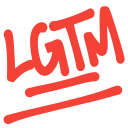
The LGTM / Approval Case: Already Standard in Developer Culture
:lgtm: on a pull request is as accepted in developer culture as typing "looks good." It's the emoji equivalent of "approved". These aren't decorative—they're functional. A GitHub PR with 8 LGTM reactions tells you the code is ready. One without tells you it's still in review.
Developers didn't ask for permission to use these. They started using them because they work. Now they're embedded in workflows. Teams that haven't formalized them are leaving productivity on the table.
The Warmth Factor: Emoji as Organizational Care Signal
There's also a softer ROI: emoji makes a workspace feel intentional.
When you upload custom emoji, you're signaling to employees: "We thought about your experience here. We didn't just use the defaults. We invested in making this space feel like ours."
This matters more than it sounds. Employees who feel their employer cares about small details tend to stay longer. They're more engaged. They recommend the company as a place to work. These aren't just vibes—they're operational outcomes.
Blob Cat emoji are designed to make people smile. That's not an accident. A company that uses warm, expressive emoji in its Slack is building a culture where warmth is valued.



The Enterprise Scale
Microsoft Teams has organization-wide custom emoji. Large enterprises with thousands of employees are using this at scale—not just for fun, but as operational vocabulary.
A financial services company might have emoji for deal-stage workflows. A dev shop might have emoji for environment states. An agency might have emoji for project status. At scale, this becomes infrastructure.
The companies doing this aren't trying to be cute. They're trying to reduce communication overhead across thousands of people. If 0.5% of communication can happen asynchronously via emoji instead of synchronously via meeting, the math at enterprise scale is enormous.
Who Should Invest
- Remote and async-first companies (where communication friction is high)
- Developer teams (LGTM, approval, deploy workflows are embedded in culture)
- Companies with high meeting load (anything you can move to async is a win)
- Organizations with strong internal culture goals
Who shouldn't:
- Fully in-person, co-located teams (communication overhead is already low)
- Companies without Slack or Discord (emoji don't matter if you don't have a platform)
Get workflow emoji for your team. Start with Approval emoji pack for development workflows, or LGTM pack if you're building with GitHub and need stronger visual signals in code review.